Search This Blog

Showing posts with label Dyslexia. Show all posts

Saturday, 15 September 2018

Is clutter affecting your health or wellbeing, or both? Then fill in this form and take it to your GP

You can now follow @HoardingIceBreakerForm on Facebook


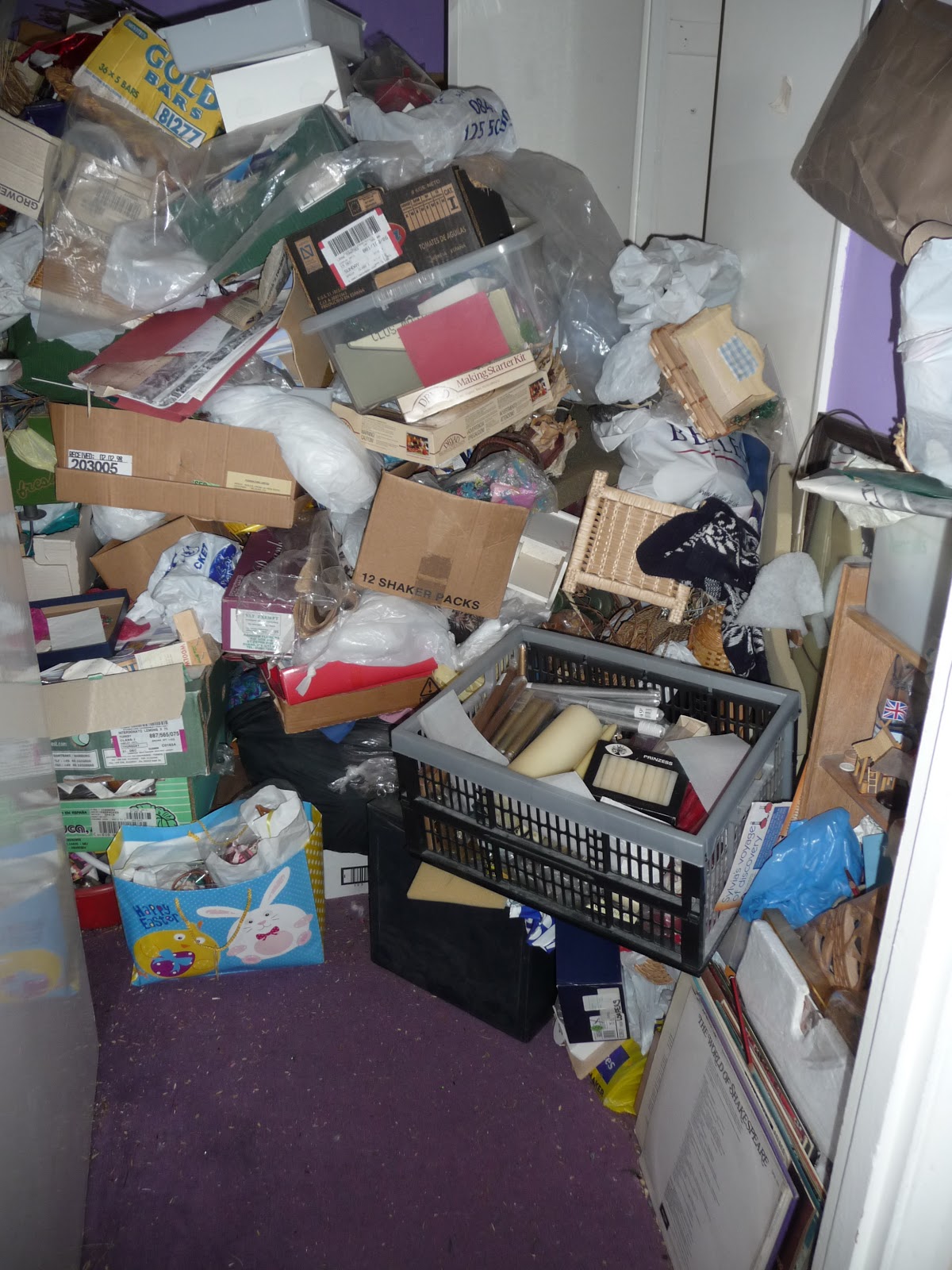
Feeling unwell, overwhelmed or at the end of our tether because of clutter, disorganisation or hoarding is a much more common, debilitating and potentially life-changing problem than you might think. 

Chronic Disorganisation 
Chores that some people find easy can be a nightmare for others - like filing paperwork, time-keeping, meal-planning, money management or quickly finding things that have been put away in that safe place - so safe you can't remember where it is! 

Juggling a busy lifestyle or having to cope with expected or unexpected life events doesn't help, and add to that an existing health condition - or one that you may not even know you have - and it can become overwhelming and a recipe for disaster.

We regularly hear of people who feel so anxious or embarrassed about their chronically disorganised homes that they won't allow people in - even when they have no heating, hot water or electricity, and are in desperate need of help and support from trades people such as plumbers, electricians or heating engineers.

It can affect a person's health, their relationships and their ability to function normally - in their home, in their personal life and sometimes at work too.

Hoarding behaviours
And then there's the more extreme end of the clutter spectrum - hoarding behaviours - which involves three main problems:
  • Excessive and compulsive acquisition of items - some of which may appear to be useless or of limited value to many people
  • Extreme difficulty letting them go 
  • Having so many possessions that it prevents or precludes the use of living spaces for what they were designed for


In June 2018 the World Health Organisation (WHO) classified Hoarding Disorder as a mental illness, although only specialists will be able to diagnose it.  

It's estimated that between 2%-6% of the population exhibit hoarding behaviour.  And in England* The Care Act 2014 classifies hoarding as potentially being self-neglect. Which means GPs and agencies coming into contact with hoarders should report patients exhibiting hoarding behaviours who are self-neglecting to the local authority, so that it can be investigated by the local Safeguarding team.

*There may be slightly different arrangements for Scotland and Wales

Concerned relatives, friends & neighbours
It's often concern over a loved one, friend or neighbour who exhibits these behaviours that causes heartache or health problems for the relatives or friends who are at their wits end to know how to help them change.  

Especially as excessive amounts of clutter creates high safety risks, not only for the people living in a property, but also neighbours and public safety services such as the Fire & Rescue Service (FRS) who get called out in the event of an emergency.  


When someone's safety, health or wellbeing is affected, it's time to take action.
The ice-breaker form helps people overcome the awkwardness or embarrassment of not knowing where to start the conversation about health problems related to extreme clutter, hoarding and disorganisation.   

It's important to note that GPs assess and treat patients all the time for conditions which can make organising difficult, such as:

Click here to download a list of examples of some of the medical conditions and other contributory factors that may be encountered when working with people who have clutter, chronic disorganisation or hoarding issues.

So how do you ask for help using the Ice-Breaker form? 
The idea is that people download the ice-breaker formtick the relevant boxes and present it to their GP, or other medical professional. 


The Ice-Breaker form can be downloaded from these websites
We're delighted that our friends at the following organisations have kindly endorsed the use of the form, which can be downloaded from their websites:
  • Hoarding UK - the UK charity for people affected by hoarding, and organiser of the UK's first National Hoarding Conference in May 2018
  • Help for Hoarders - a website for compulsive hoarders and their families 
  • Clouds End CIC - the UK's first social enterprise for helping hoarders, founded by hoarding campaigner Heather Matuozzo, who was a consultant to the BBC for their 2012 and 2013 documentaries, “Britain’s Biggest Hoarders” (the 2012 documentary won the MIND Media award).
  • Hoarding Disorders UK CIC - a Berkshire-based Community Interest Company co-founded by Jo Cooke, author of the insightful and compassionate go-to book "Understanding Hoarding" that has deservedly received numerous 5* reviews on Amazon.
  • Life-Pod Clutter Management CIC - a Scottish social enterprise founded by pioneering chronic disorganisation and hoarding behaviour specialist and trainer Linda Fay - organiser of the International Hoarding, Health & Housing Conference in Edinburgh in October 2018
  • Hoarding Awareness Week - the annual event (originally started by the Chief Fire Officers Association in 2014) to raise awareness of hoarding and reduce the stigmas associated with it.
The ice-breaker can be used to start a conversation about yourself or someone you're worried about if your health has been affected, and includes tick-box statements like:
   It’s hard for me/them to talk about this
   I/they feel alone and need support
   Other people don’t seem to understand
I/they feel distressed, and/or indecisive about what to do to make things better
I’ve/They’ve become secretive/ withdrawn about this situation
   My/their self-confidence/self-esteem is very low
   I/they feel very uncomfortable about/reluctant to change
   It can be hard for me/them to live normally/work/study/travel/pay bills/make or keep friendships and relationships
   I/they have been notified by the Local Authority/my Landlord/other agency that action will be taken if I/they don’t do something soon (explain which agency – eg. bank, landlord, Environmental Health, Family Liaison, boss, etc)
   Family/friends/neighbours have taken (or have threatened to take) matters into their own hands
   I/they don’t feel I/they have anyone to talk to who would actively listen empathetically and/or non-judgementally to my/their concerns
   I feel out of my depth with my knowledge of how to help and/or support my relative/ friend/colleague, or myself 

And asks the Medical Professional to "Please talk me through the types of help and support that could empower me to feel better".

The form also includes an extract from the Clutter Image Rating Scale on the back, as the FRS like to know whenever Level 5 or above is reached, so they can visit and do a Safe & Well visit (also known as a Home Fire Safety visit) and discuss the risks with the resident, advise on actions that can be taken to make things safer, including emergency evacuation plans and perhaps fitting free smoke detectors.

What can the GP do to help?
Helping people whose health has been affected by chronic disorgansiation and/or hoarding is rarely a quick fix.  

Recently we heard about a case where someone (who exhibited hoarding behaviours and had all sorts of health problems due to their complex situation) had completed the ice-breaker and ticked every single box except one.

The GP used the ticked responses in the questionnaire to ask further questions about the patient's symptoms and difficulties, which gave him a better understanding of the problems the patient was facing - which included potentially being evicted.

The GP referred the patient for blood tests; prescribed treatment for various health problems; referred them for counselling for mental health problems (including anxiety and depression), and an assessment for Autism and ADHD.  And because the patient was self-neglecting they were also referred to the local Adult Safeguarding Board.  

A multi-agency team was formed, which enabled the patient to get advocacy help and support, and lead to intervention from specialist Professional Hoarding Practitioners.  

The Professional Hoarding Practitioners used an holistic and practical person-centered approach to empower the patient/client to make decisions which resulted in the number of possessions gradually being reduced, and the safety risks associated with the cluttered property being significantly reduced too - to the extent that the eviction was cancelled.  

The patient continues to have therapy and work with the multi-agency team which is supporting them. As a result, the patient's anxiety levels have reduced, their health has improved and they are now attending a hoarding support group.

Act now, before your health deteriorates any more....
If you or someone you know feels unwell as a result of clutter or disorganisation and don't know who to turn to, please don't poo-poo their difficulties and tell them to snap out of it - it's likely to make them feel worse.

Instead, why not suggest that they click here to download this simple to use ice-breaker document, fill it in and hand it to their GP at their next appointment?

Because life's too short for your health to be ruled by clutter or disorganisation.


SURVEY:  Please let me know how you get on using the Ice-Breaker form by completing this survey (click here).  

                     Thank you.


COME AND SAY "HELLO"


Past events:
We're excited be having a stand at the following events:
Fastminds Neurodiversity Festival - 14th September 2018 - The Empire, 161a Clarence St, Kingston, KT1 1QT
- Walton-on-Thames Fire Station Open Day - Saturday 15th September 2018
- The National Hoarding Conference on 14th May 2018, at the start of National Hoarding Awareness Week.

Originally published July 2015 - updated May 2018, June 2018, August 2018


Click here to return to Rainbow Red's website

Thursday, 31 March 2016

How can clutter, disorganisation or hoarding affect our health?

LIFE - Life Isn't For Ever, so treasure it, and yourself and live it WELL!

That was the key message from the workshop that I ran recently at the annual conference of The Association of Professional Declutterers & Organisers UK (APDO) in London. 


Participants (including professional organisers and a recovering-hoarder) came away with a better understanding of:
  • the types of health and wellbeing risks associated with living in a malfunctioning home
  • how ill-health - both physical and mental - can cause clutter, disorganisation and hoarding
  • where to go in the UK for appropriate help and support
I also encouraged professional organisers to tell their clients about the ice-breaker form I devised in 2015 - it will enable them to have a conversation with a medical professional if clutter or disorganisation is affecting their health, or that of a family member or friend.

As the theme of the 2016 conference was "The Power of Letting Go", the workshop included topics like how to let go of stigmas associated with asking for help, by using CBT techniques to feel more confident about being able to ask for help.  Which is why our wise owl is flying the flag for Time To Change England's biggest programme to challenge mental health stigma and discrimination.

One of the workshop participants - Jo Cooke of Berkshire-based Hoarding Disorders UK - said "I came away very inspired by Cherry’s presentation.  Cherry’s workshop was not only well researched and extremely informative. But Cherry also highlighted the crucial facts relating to the implications, impact and regulations surrounding hoarding disorder.  Cherry speaks with confidence and passion.  I came away with some excellent tips on how to help my clients. Cherry is very inspirational.  I would certain recommend attending this workshop. Excellent."

It was the second year in a row that I'd run a workshop at the two-day conference, where this year's speakers included Carl Honoré, globetrotting ambassador for the Slow Movement Canadian organising guru Colette RobicheauGwendoline Alderton from GA Interiors (UK) who talked about Style for Sale like a Professional, and Keren Lerner from Top Left Design who explained How to Create a Killer Website.

For more information about the clutter and health workshop or to book Cherry to run this workshop for your group, please contact: cherry@rainbowred.co.uk or phone 07931 303310.

+++


Cherry Rudge of Surrey-based Rainbow Red is the daughter of a hoarder, so has had personal experience not only of the day-to-day physical, psychological and emotional trials and tribulations faced by families affected by living with too much stuff, but also the sensitivities required to calmly help people declutter and create order out of chaos. 


She is a pioneering member of apdo-uk’s Hoarding Advisory Team, and a member of The Chief Fire Officers Association’s (CFOA) Mental Health & Hoarding Working Group (which organised the first ever UK Hoarding Awareness Week in May 2014).

In addition to 1-2-1 sessions with hoarders and those affected by chronic disorganisation, she offers training and advocacy services and is an advisor to organisations including media production companies, Surrey Fire & Rescue Service, ADHD Support Groups and social landlords.

Originally published in March 2016 - updated in June 2016


Monday, 26 May 2014

Clutter/disorganisation & Autism Spectrum Disorder (ASD), Aspergers, Attention Deficit Disorder (ADD/ADHD)

A friend very kindly sent me a recent article from The Guardian newspaper, entitled "A letter to my son....whose flat is filty - the letter you always wanted to write".

The article is in the style of a letter from a Mum to her son, and highlighted for me something I've seen a lot of since I've been a professional organiser: that some of my clients who have difficulty coping with clutter or disorganisation show symptoms related to being on the Autism Spectrum (also known as Autism Spectrum Disorder, or ASD).

And yet - for the most part - my clients don't seem to know it; instead, they often struggle with things like Dyslexia, Dyspraxia, depression or anxiety due to low self-esteem, partly due to their inability to be what I've heard some of them describe as "normal". 

I've heard comments like "I want to have an immaculate house like my neighbours, but I can't seem to get my head around organising things or keeping regular routines" or "people tell me I need to do this or that, but it makes me feel upset and pressured because I find it so difficult to do what others seem to find easy."

Not once have my clients ever said they've been tested for or diagnosed with Autism - a condition that affects more than 10% of adults (about 588,000 people in the UK today) - ADD (Attention Deficit Disorder) or ADHD (Attention Deficit Hyperactivity Disorder).

I find it desperately sad that so many people slip through the diagnosis net - mostly because little was known about Autism and/or ADD/ADHD when they were younger; they've been left to fend for themselves, without the right kind of help or support, or - most likely - were either too embarassed to ask for help, or didn't know there was help available in the first place. 

I belong to The Association of Professional Declutterers & Organisers (apdo-uk), which published a newsletter with useful guidelines for helping people with ADHD get organised.

One of apdo-uk's advisors - Jan Assheton - provides coaching solutions and training relating to ADHD and Asperger's. Jan says "The condition rarely exists alone and may be diagnosed alongside Dyslexia, Dyspraxia, Depression, Anxiety, Asperger's, Obsessive Compulsive Disorder (OCD), Hoarding Disorder and Sleep/Eating Disorders."

I personally believe that many people at the chronic end of the clutter spectrum -who have hoarding disorder (a mental health condition) - are prime examples of vulnerable people affected by these types of conditions, or a combination of these and/or other physical, neurological or mental health problems.

Some hoarders in the past have been unlucky enough to end up suffering the humiliation, embarassment and trauma of having to undergo an enforced major clean-out by Environmental Health and/or eviction - expensive "solutions" which recent evidence proves can do far more harm than good to the recipient, and result in them feeling worse than ever about themselves. 

It can demotivate them from any desire to declutter.  In fact, it can result in making them hoard all over again in no time as a way of trying to control their lives and surround themselves with items to create a "comfort zone" of personal possessions that make them feel better.

Some hoarders have been known to be so traumatised by clean-outs or eviction that they've taken or attempted to take their own lives - if that's not a cry for help or in despair, I don't know what is.

A diagnosis of Autism or ADD/ADHD could have resulted in the type of practical support - for example, training, counselling and/or medication - which could have helped prevent their extreme situation from occuring in the first place, or funding for the services of empathetic, non-judgemental professional organisers to provide motivational support, advice and practical assistance.

Which is one of the reasons why I'm so committed to UK Hoarding Awareness Week, the recent campaign by The Chief Fire Officers Association (CFOA), which I helped to organise.  The aims of the campaign are to:


  • To spread more widely an awareness of hoarding facts                       
  • To promote greater understanding and acceptance across those who can influence change
  • To encourage a stronger tendency for those who can influence change to support and promote at key moments.
By raising awareness of hoarding amongst the likes of GPs, mental health services, social services, Vulnerable Children and Adults Teams, Environmental Health, landlords, housing associations, Citizens Advice and the emergency services, it will hopefully reduce the number of people falling through the hoarding "net", so that they get the right type of help at the right time, and don't have to endure extreme measures which could blight the rest of their lives.

So I urge anyone who has an influence over assessing children's health to look carefully at whether they might be affected by ASD and/or ADD/ADHD; a simple diagnosis could make a HUGE difference to the quality of their lives - and the lives of their loved ones - in the future, and help them live a more cluttered, organised and stress-free life. 

To those of you responsible for providing support to vulnerable adults, I urge you to put yourself in their shoes, and consider having them assessed for ASD and/or ADD/ADHD before making life-changing decisions which could cost more than just money.

As the daughter of a hoarder, I thank you in advance, from the bottom of my undiagnosed ASD/ADD/ADHD heart.


++++
About Autism & ADHD


The National Autistic Society (NAS) is the UK's leading charity for people with autism and their families. According to their website, Autism condition is a complex developmental disability involving a biological or organic defect in the functioning of the brain.  It is a lifelong developmental disability with no cure; children with autism grow up to be adults with autism.

NAS says that Autism affects how a person communicates with, and relates to, other people. It also affects how they make sense of the world around them. It is a spectrum condition, which means that, while all people with autism share certain difficulties, their condition will affect them in different ways. Some people with autism are able to live relatively independent lives but others may have accompanying learning disabilities and need a lifetime of specialist support.


According to NAS, ADHD is a condition related to Autism, that makes a person inattentive, impulsive and hyperactive. An increasing number of children are diagnosed as having both ADHD and autism. Some parents are apparently only diagnosed with ADHD after their children have been diagnosed with autism.
http://www.autism.org.uk/about-autism/related-conditions/adhd-attention-deficit-hyperactivity-disorder.aspx

NAS has developed a framework for understanding and responding to the needs of children and adults on the autism spectrum. The framework is also useful in identifying underlying issues, reducing the disabling effects of the condition and providing a cornerstone for communication. It also forms the basis of all autism-specific staff training and an ethical basis for intervention. The acronym for this framework is SPELL. SPELL stands for Structure, Positive (approaches and expectations), Empathy, Low arousal, Links.

For more information about Autism, Asperger's and ADD/ADHD:


To find a professional organiser for help with decluttering and getting organised, check out apdo-uk's website: www.apdo-uk.co.uk