Search This Blog

Thursday, 5 March 2015

Don't pour unwanted medicines down the sink or toilet - become an Antibiotic Guardian instead

Rather than pour out-of-date and unwanted medicines down the sink or toilet (which could mean the drugs then get into the environment or water we drink), we regularly take unwanted medication from decluttering clients to pharmacies for safe disposal. 

Plus, did you know that antibiotic resistance is one of the biggest threats facing us today?  

Without effective antibiotics, many routine treatments will become increasingly dangerous. Setting broken bones, basic operations, even chemotherapy all rely on access to antibiotics that work. 

Even large corporations are finally realising the impact that over or mis-use of antibiotics can have.  

According to an article on the BBC website today, in a bid to win back customers amid slowing sales, global restaurant chain McDonald's has announced they are to begin reducing the use of antibiotics in its chicken products; they will focus on removing those antibiotics than can have an impact on human health, but keep those necessary for poultry welfare.

Cherry Rudge of Surrey-based professional organising firm Rainbow Red has pledged to be an #AntibioticGuardian.  You can make a pledge too via www.antibioticguardian.com

So why not join her and pledge to be an Antibiotic Guardian, and help her safeguard this precious commodity, and the human race?  

On behalf of this and future generations, thank you.

For more information about antibiotics and how to become an Antibiotic Guardian click on the links below and check out the websites for:

Antibiotic Guardian
MRSA Action UK
NHS UK
Public Health England

Saturday, 21 February 2015

Nonviolent Communication (NVC) - resolving conflict and differences peacefully

If you've ever had a heated conversation with someone (and who hasn't?!) and come away feeling utterly frustrated and not listened to, or felt the other person didn't seem to understand or respect your point of view, then let me introduce you to a technique that I've discovered - through personal experience - can a be a complete life changer.

It's an empowering process called Nonviolent Communication (NVC), which was developed by a clever chap in the USA called Dr Marshall Rosenburg (1934-2015), and introduced to me by a friend and professional organising colleague of mine - Gina Lawrie of Empathic Decluttering, who I've worked very successfully with on various decluttering jobs with hoarders.
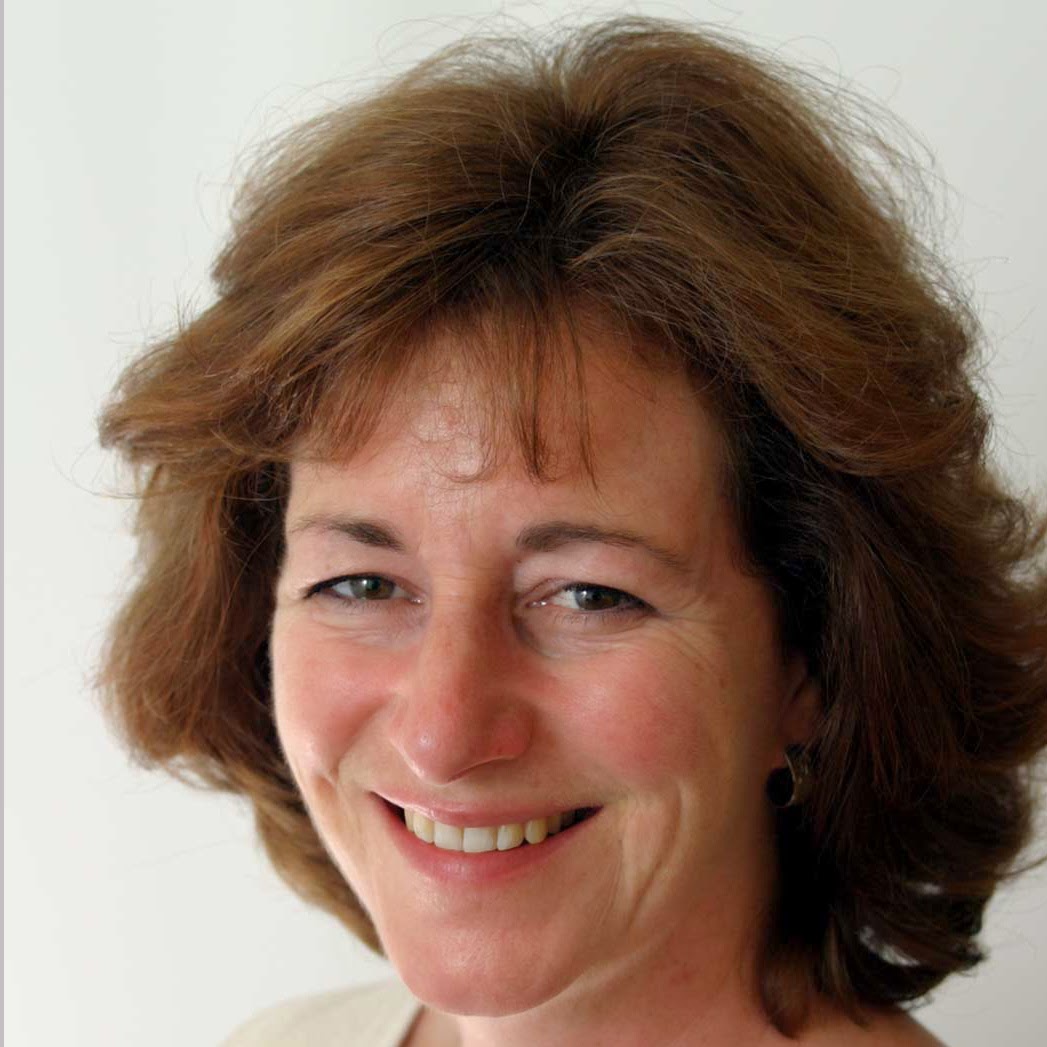
Gina (based in Farnham in Surrey) - also happens to be an international NVC consultant, trainer, coach and mediator. She co-developed (in association with her NVC colleague Bridget Belgrave) a practical and fun method of teaching NVC called NVC Dance Floors.  

This instantly appealed to me when I found out about it because (a) I like dancing (don't worry, it's not strenuous and you don't need to wear any sequins!), and (b) it doesn't involve death by PowerPoint or having to sit and read a book! 

I've been on a couple of training days to learn the fundamentals of NVC, which focuses on three aspects of communication:  self-empathy, empathy and honest self-expression. And of course, the more I learn about NVC, the more I realise there's more to learn!

NVC has increased my confidence to communicate with others in a more structured way, and express my observations, feelings, needs and requests with clarity in order to resolve conflicts and differences peacefully.  

As a result I've managed to calmly facilitate conversations in situations where people with passionate opinions or anger-management problems have attempted to take control of a situation.

I've also coached others to communicate more specifically and less aggressively too (so that they state actual facts rather than make assumptions or jump to conclusions), which means that if there's ever a disagreement or heated debate, the result is usually more likely to result in a win-win situation than a stalemate - or worse.

NVC can help reduce conflict caused by clutter or disorganisation


Because clutter is a very emotive subject, it can create a lot of tension amongst family members, friends, neighbours, landlords and other agencies working with hoarders. 

Which is where NVC comes to the rescue.  

In extreme cases where clutter is a problem, using NVC techniques can help open or re-open communication channels and resolve conflict; which can mean the difference between someone feeling that their views are being listened to and taking action to reduce their clutter, or not taking action and be evicted from their home. 


"Vive la NVC" I say....

My vision is to have NVC taught in schools around the world, so that future generations will know how to use it effectively to talk to each other more respectfully, and negotiate peaceful ways of settling differences of opinion.  Imagine all that time and money it would save. Less grief, less heartache, fewer stress-related health problems....

In the meantime, I hope that by reading this blog you'll feel motivated to learn more about NVC, and that by putting it into practice it becomes as life-changing for you as it's been for me.

For more information about NVC, check out 
the Center for Nonviolent Communication website. www.cnvc.org

To find out about Gina's training days, 
check out the Calendar section of her website, or call her on 01252 728242.


Thursday, 4 December 2014

Historical Hoarding Training for Professional Organisers

On Friday 28th November 2014, 
history was made 

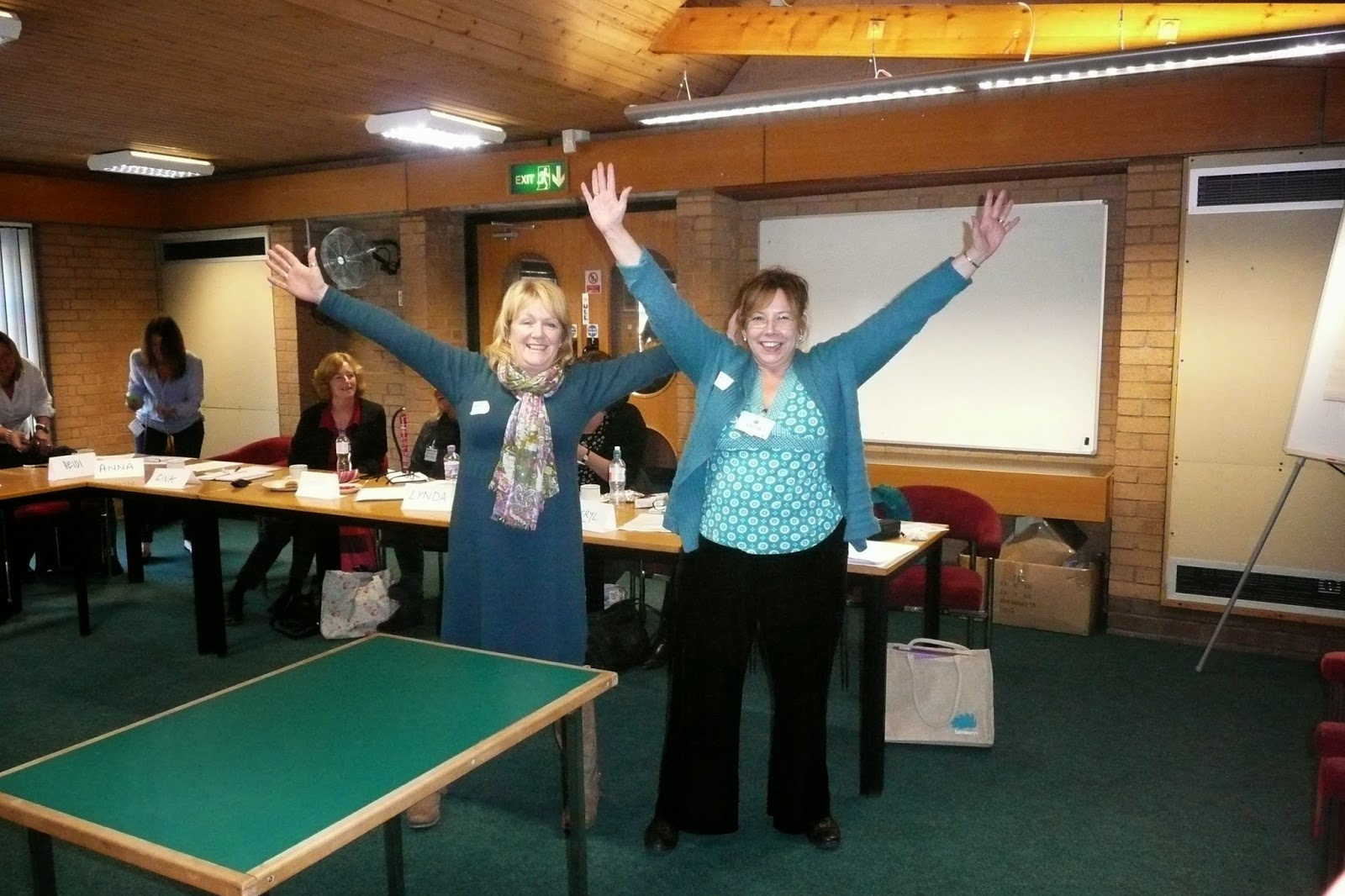
Around 10% of the Membership of The Association of Professional Declutterers & Organisers UK (apdo-uk) came together with fire officers for the UK's first ever Hoarding Awareness Training for Professional Organisers - a fun, warts and all day designed to help people decide whether they want to take on the types of challenges associated with helping people affected by hoarding.

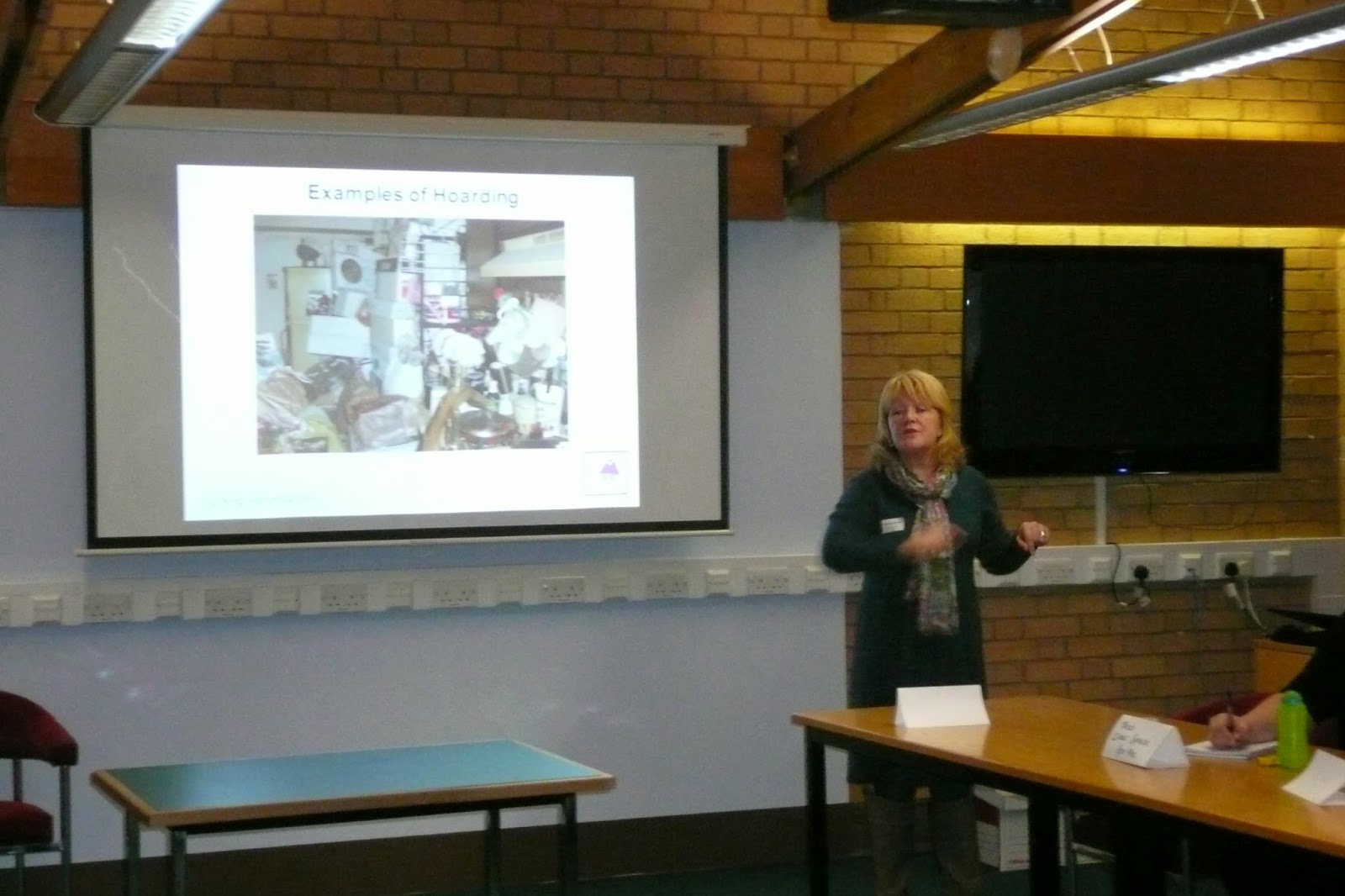
The event was held at Surrey Fire & Rescue Service's HQ in Reigate, and was led by Heather Matuozzo of Clouds End CIC and Cherry Rudge of Rainbow Red, advisors to The Chief Fire Officers Association's (CFOA) Hoarding Working Group.


Heather gave a fascinating insight into Hoarding Disorder - which was classified as a mental illness in The American Psychiatric Association's Diagnostic and Statistical Manual of Mental Disorders (DSM5) published in May 2013 - and outlined typical traits of individuals with hoarding behaviours; the necessity to be a detective when assessing and working with them - in order to discover what the underlying reasons are for the hoarding - and ideas for motivating people to help them with decision-making.
  
Andy Honey of Clouds End CIC described examples of complex hoarding cases involving a multi-agency approach, and outlined options for inspiring people to disposal of unwanted items, whilst Cherry showed outlined processes, stakeholder complexities and possible risks involved when multiple agencies are involved. 

Professional organisers thinking of working with individuals with hoarding tendencies were left under no illusion about how overwhelming and time consuming it can sometimes be when working with them.  


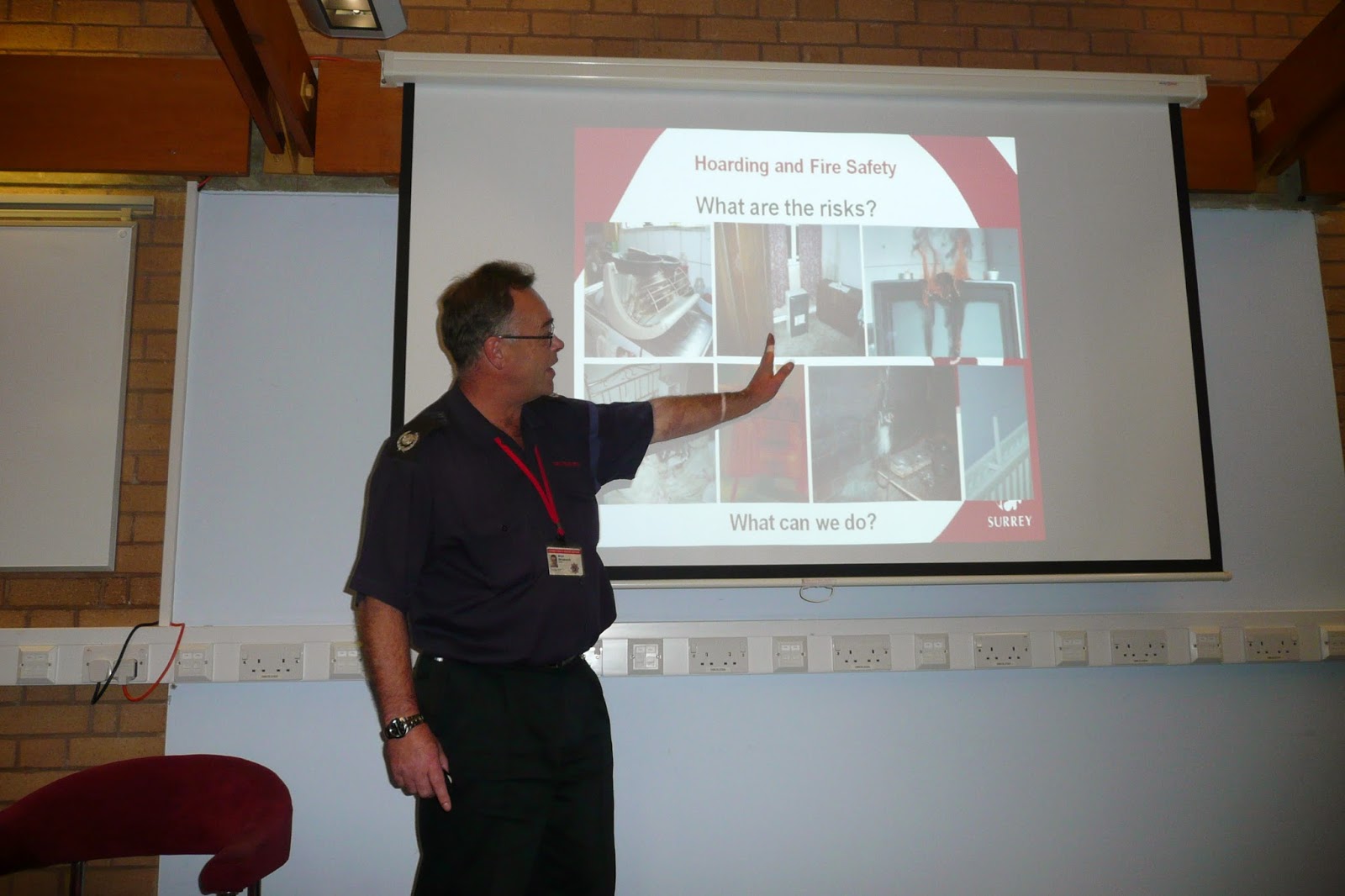
Bryn Strudwick - Group Commander, Community Safety Manager of Surrey Fire & Rescue Service - outlined examples of fire safety dangers associated with hoarding, and what can be done to reduce the risks.  Shocking photos demonstrated where people hadn't appreciated the risks to them and their homes.  

Delegates were given a copy of Surrey Fire & Rescue Service's brand new Multi Agency DVD Staff Training Package, entitled Keeping YOU Safe from Fire Campaign.  The pack is designed to help agencies work with them to protect vulnerable people in Surrey living in the community from the risks fire.


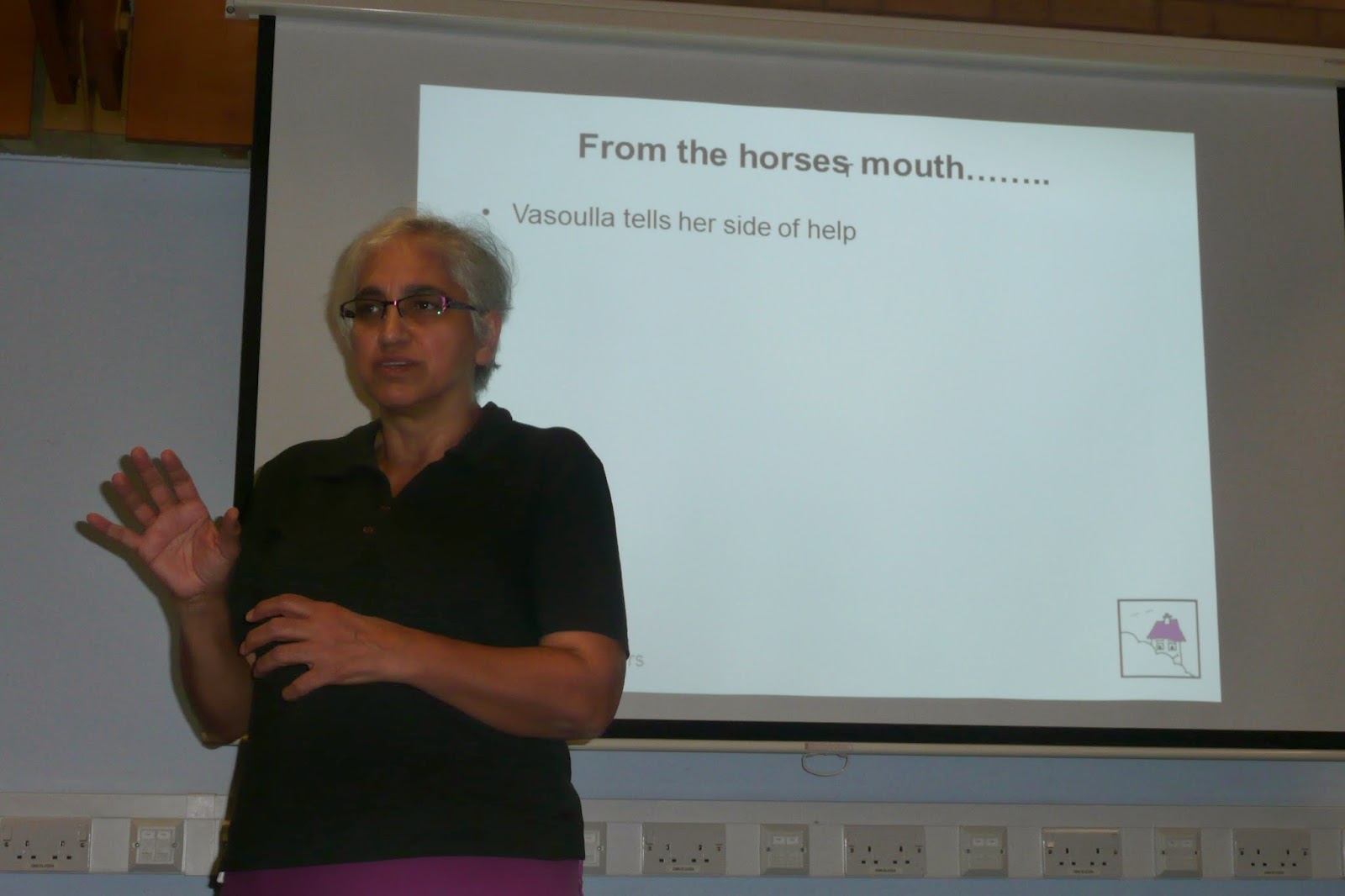
Vasoulla Saviddou - who appeared on TV in Britain's Biggest Hoarders in 2012 - gave a fascinating insight into her personal experiences of having hoarding behaviours, and how it felt for her to have professional organisers helping her.


Heather commented: "Many thanks to Bryn Srudwick for organising a 'groundbreaking' and 'pioneering' training session - combining some natural partners for helping people with hoarding issues."
Final thought…
Never underestimate the power of your actions.
With one small gesture you can change a person’s life.

For better or for worse….

Delegate feedback
"The 'Working with Hoarders' training day today in Reigate was brilliant! Thank you both Cherry and Heather (and Andy and Vassoulla). I feel my understanding of my work is improved whether I eventually work with serious hoarding or not."
"Very insightful and I believe a must for everybody working with hoarders or contemplating to do so.  What a brilliant day!   Thanks so much." 
"The info day at Reigate was just great. So informative and interesting.  I'm so glad I managed to get there."   
"Thanks Heather and Cherry - found it very useful, not least as it really brought home what working with hoarders might involve."
Further hoarding awareness training for professional organisers planning on working with hoarders is planned, in association with Fire & Rescue Services across the UK.  

For information please contact Heather Matuozzo or Cherry Rudge.


Sunday, 19 October 2014

A grand day out at the Hammersmith Hoarding event on 15th October 2014


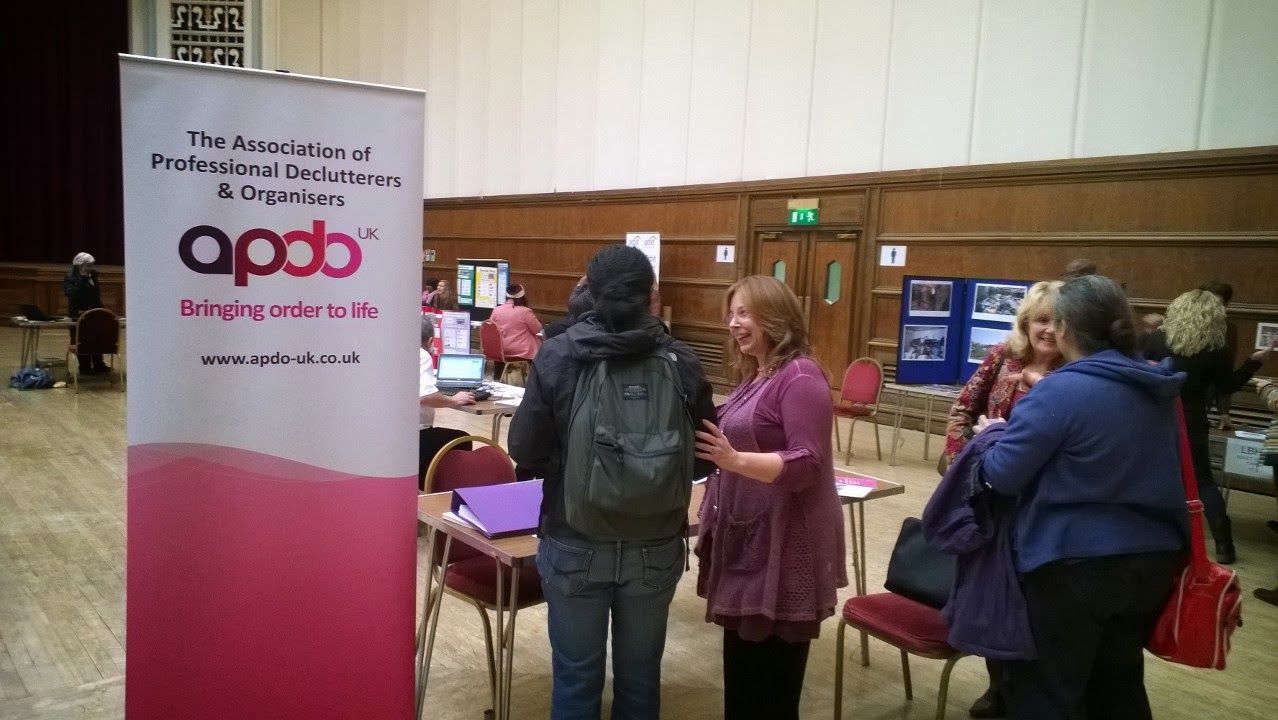
It was all go on the apdo-uk stand at Wednesday’s Hoarding event at Hammersmith Town Hall (15th October 2014), where I was representing apdo-uk. People literally queued up to find out about the services of professional organisers!
apdo-uk’s stand was located immediately inside the main entrance to the hall, so it was impossible to miss us! A steady stream of guests started arriving from 9.30am, and my last consultation of the day finished at about 6.15pm (even though the event officially finished at 4pm!)!

It was good to meet probationary apdo-uk member Trio Wilson of Clear Space for Me who visited from Oxford, and I have to give a special thank you to fellow member Caroline Vienot of The Passionate Organiser for helping out on the stand and answering questions for a while when it got too busy – otherwise goodness knows what time I’d have got out of there!


Social Worker Fiona Harding of
Hammersmith & Fulham
Adult Social Care Team
with apdo-uk Member
Heather Matuozzo of Clouds End CIC
Whilst I didn’t get a chance to go round and see any of the stands, I’m told by Head of apdo-uk’s Hoarding Advisory Team Heather Matuozzo (of Clouds End CIC) that there were multiple agencies represented at the event, including social services, mental health (MIND), London Fire Brigade, the local Hoarding Support Group, Orbit Housing Services, clearance company Just Clear and a gentleman who was explaining about ways of selling unwanted items online.

Social Worker Fiona Harding of Hammersmith & Fulham Adult Social Care Team was there - she's co-author of an article entitled "Developing an Approach to Working with Hoarding: Space for Social Work" 

On the apdo-uk stand we had enquiries from all sorts of people including social workers, occupational therapists and community nurses from across all three Boroughs hosting the event (Hammersmith & Fulham, Kensington & Chelsea, and City of Westminster), and we also heard some very interesting experiences about and from quite a number of hoarders!

People were keen to learn about the Clutter Image Rating Scale which was devised by pioneering psychologists Dr Gail Steketee and Dr Randy O. Frost in the USA as a way to measure the degree of clutter in the kitchen, living rooms and bedrooms of hoarders homes.  It has been adopted as a best practice gauge by agencies all over the world who support hoarders, including social services and Fire & Rescue Services.

There was also interest in how to take part in hoarding research being done by Professor Paul Salkovskis, Dr James Gregory and Dr. Claire Lomax at the University of Bath. 

Plus, of course, the usual “where/how do I start decluttering?!”

One particularly interesting and relevant conversation was about DBS checks (what used to be CRB checks) and whether it is compulsory for professional organisers to have one - which currently it isn’t. However, it was made clear to me that anyone working with hoarders and vulnerable adults should definitely consider getting DBS checked if they want to get work from councils. Certainly Heather makes it compulsory for anyone working for Clouds End CIC to have a DBS check; fortunately, she can arrange this service as Clouds End is a Social Enterprise company.

At lunchtime author James Wallman gave a short talk about his book “Stuffocation”, and Heather gave a very well received Clutter Clinic talk, which resulted in a stream of people coming straight to visit the apdo-uk stand afterwards – whatever you said, thank you Heather!

BEFORE
AFTER

In the absence of apdo-uk leaflets to give out, I had to use my own business cards - as you can see, quite a few were taken during the day!  


Recycle, shop online & donate to The Firefighters Charity

One of my top highlights of 2014 was visiting the Houses of Parliament in May to help launch the first ever UK Hoarding Awareness Week, organised by the Hoarding Working Group of the Chief Fire Officers Association, of which I'm a member.  

As a result I'm also now working closely with Surrey Fire & Rescue Service, which has well and truly opened my eyes and given me a much greater understanding and appreciation of the extraordinary lengths the Fire & Rescue Services (FRS) go to to try and prevent fires and accidents, as well as fight them.


Neenaw! Just £5.00 buys a toy fire engine
Which is why I'm doing my bit to support The Fire Fighters Charity, not only by buying Christmas cards and gifts from them, but also by promoting their recycling services - something very relevant to decluttering!

Things like textile recycling, door to door clothing collections, and printer cartridge recycling helps them raise money towards the £9 million pounds per year it costs to support serving and retired members of the fire and rescue community when they are in need. 

For example, the charity runs three rehabilitation and recouperation centres; a help-line; a magazine; health, well being and welfare services, plus local support for people in their homes.

So please help me help our brave firefighters and their families by giving a donation, buying something from their online shop, or depositing your unwanted items at Fire Fighters Charity textile banks at fire stations, community sites and supermarkets across the UK (they're bright yellow with the Charity's logo on them so you can't miss them!).  Enter your postcode here (scroll down to get to the table) to find your nearest bank.

With your help we can make life easier for the wonderful people who help protect and save us, and help recycle and re-use our planet's precious resources at the same time.

Thank you.

Cherry 

Thursday, 16 October 2014

Friday, 3 October 2014

Dementia awareness training

There are plenty of things about my job which give me enormous amounts of pleasure, and the training I've received this week has done just that.  

On Monday I was very fortunate to be a guest of Surrey Fire & Rescue Service for a half day practical training session that they're giving ALL their staff - both firefighters and office-based - in order to help them improve the way they help and protect people with dementia.


I won't give the game away and explain what the training consists of, just in case you're due to attend the training and don't know what to expect!  Suffice to say it was BRILLIANT, disconcerting, disorientating, a little painful at times (but not in a kinky way!) and DEFINITELY not death by PowerPoint! 

I feel very honoured to have been given the opportunity to attend Surrey FRS's training, and proud to live in a county where people with dementia can sleep safer in their beds, knowing that if there is a fire they'll meet firefighters who will be dementia aware, and should hopefully be more respectful and patient with them as a result.

I came away feeling I had a much better understanding of the difficulties faced by older people, and particularly those with dementia.  Especially with things like not being able to see or hear things clearly, disorientation and feeling hopeless.


I'm also now a total convert to the need for people with dementia to have a home safety visit from the Fire & Rescue Service, and fitting Telecare systems in the homes of people with Dementia. 

I learned that of 8 deaths in Surrey caused by fire in the home, 6 of the people had dementia.  All of them had smoke alarms, but NONE of the smoke alarms were linked to a Telecare system.


Telecare enables people to remain people to remain independent in their own homes, by providing person-centred technologies to support the individual or their carers.

It costs from around £55 per quarter, and includes things like:

Wearing a pendant alarm means that when the pendant is pressed, the alarm is activated and a call is automatically made to a care centre, this is staffed 24 hours a day, every day of the year. Without having to get to the phone, the caller can then speak to a specially trained operator, who will respond to their needs and organise appropriate assistance.

As dementia is a progressive disease (contrary to what a social worker told me once....), it's important to get Telecare installed in a person's home sooner rather than later, so that they get used to having them around; otherwise they may not remember to use them in the event of an emergency, or attempt to disable them - which defeats the object of having the system to help keep them safe!

Then on Tuesday I was in Guildford learning about "Understanding how to support people with dementia, & their carers", which was organised by Surrey County Council as part of their Dementia Friendly Surrey Campaign.


As someone who is currently caring for a close family member with Alzheimer's, the training was very timely and often poignant.

Not only was it a great opportunity to find out whether what I've been doing so far had been along the right lines (fortunately it seems it has - much to my relief), it helped me understand the enormous benefits - to me personally and for my business - of being able to respect, empower, engage and embrace people with dementia and their carers, in order to improve the quality of their lives - which was the key message of the day.


The training was delivered by the wonderfully inspirational Sarah Mould, a former Occupational Therapist turned trainer and consultant in dementia care with The Dementia Training Company.


I learned that the main risk for developing dementia is having poor blood circulation and high blood pressure, and that the most common cause of dementia is Alzheimer's Disease.

And apparently it's not just the elderly who are effected - it's becoming more common for people in their 30s to be diagnosed with dementia, which is utterly shocking.  

Equally shocking is the number of people aged over 65 living with dementia in Surrey alone.  In 2012 it was around 15,500, but by 2020 that figure is expected to rise to 19,000 (a 23% increase).  Extrapolate that type of scary statistic across the UK, and then across the world, and it becomes something of epidemic proportions.

Which means an increasing number of my friends, family, colleagues, clients and potential clients will have dementia - a sobering thought.  And even though dementia isn't necessarily hereditary, of course there's a strong likelihood I could have it too one day.

So if you come across someone who shows signs of looking as though or saying they're a bit lost or confused, or finding it difficult to explain what they're trying to do, or looking around anxiously, or having difficulty handling or understanding their money, it's quite possible they may have dementia-type symptoms.

Also look out for things like difficulties with speech, or having problems with what you're saying, asking you to repeat yourself frequently, or - the classic - repeating themselves frequently too.

Please don't turn away from these people, or ignore them - imagine how that would feel if someone did that to you under similar circumstances.


  • Be conscious of the cognitive difficulties a person may have
  • Make sure the environment supports effective communication - for example, you may need to move to an area which is quieter and less distracting for them
  • Keep calm and slow down when you're talking to them, at an appropriate volume  
  • Speak clearly at an appropriate volume, using excellent non-verbal communication (eg. calm facial expressions) and non-threatening body language
  • be specific about what you're telling them or asking them to do - DON'T spout lists at them as choices - it's unlikely they'll remember what you've said
  • Write things down to aid understanding
  • Use pictures to aid understanding (photos are better than drawings)

I applaud what Surrey County Council is trying to do through its Dementia-Friendly campaign, and I am proud to be helping it become a more inclusive and supportive place to live for people with dementia, their families and carers.   

This blog is just the first of many things I'm going to do to help cascade what I've learned this week.  

What will YOU do to make YOUR community more dementia friendly?  

Because what you do now to make it easier for people with dementia to live well could make life easier for you or your loved ones in the future.

Food for thought...


For more information: